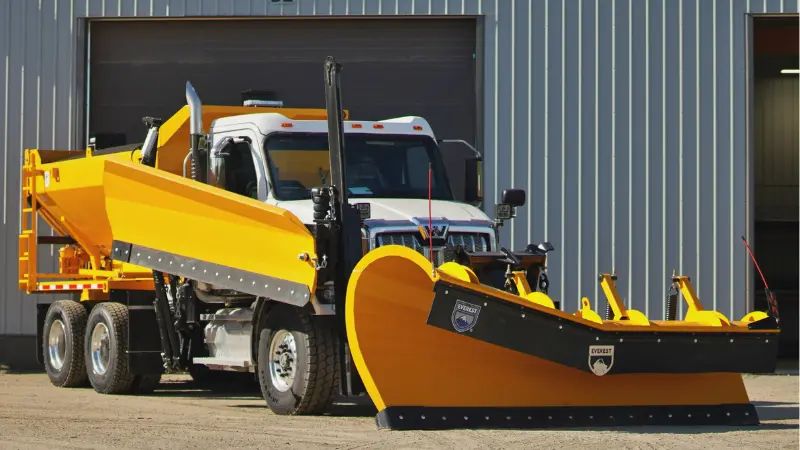
How to Choose the Right Commercial Snowplow for Your Truck
Choosing the right commercial snowplow for your truck means investing in snow removal equipment that directly impacts your productivity, snow removal performance, operator safety, and truck wear throughout the winter season.
The value of choosing the right equipment becomes especially clear when conditions get tough: heavy, wet snow, uneven roads, long hours of plowing, or the need to maintain consistent results without frequent downtime and repairs.
Here’s a practical guide based on key considerations to help you choose the commercial snowplow best suited to your truck and operations.
Assess Your Snow Removal Needs
Before comparing models and options, start by evaluating your day-to-day operating needs. Two snowplows that look similar on paper can perform very differently depending on how they’re used.
Start with the type of snow removal work you do.
Municipal snow removal operations typically prioritize reliability and durability over long distances. On roads and highways, stability, visibility, and handling at higher operating speeds become particularly important. For contractors covering different route types, versatility and efficiency are often top priorities. Private fleets generally aim to strike a balance between performance, ease of operation, and operating costs.
Consider the terrain and conditions you encounter most often.
Do you work on uneven roads with slopes, speed bumps, and other obstacles? Are you mainly clearing heavy, wet snow or lighter, powdery accumulations? Do you also deal with ice and abrasive materials? The more demanding your working conditions, the more important it is to choose a snowplow designed to withstand impacts and deliver consistent performance.
Check Compatibility with Your Truck
Even the best snowplow on the market won’t be effective if it isn’t properly matched to your truck. Two major issues to avoid are installing equipment that’s too heavy for the front axle and choosing a snowplow that isn’t compatible with your truck’s hydraulic system or mechanical configuration.
Start with weight and stability.
The snowplow, mounting system, hydraulics, and accessories all add weight to the front of the truck. Overloading the front axle can accelerate wear, affect handling, and increase the risk of mechanical failures. Proper weight distribution and vehicle stability when turning and braking are therefore essential considerations.
Evaluate manoeuvrability.
A long wheelbase, wider turning radius, or specific ground clearance requirements can limit manoeuvrability, particularly in urban areas or tight entrances. An oversized snowplow can also make certain routes harder to navigate.
Check the hydraulic system and controls.
Depending on your truck’s configuration, make sure the hydraulic system delivers the required flow and pressure and that the connections and controls are suitable for heavy-duty use. The setup should be reliable in winter conditions, straightforward for operators, and compatible with your fleet’s needs. Selecting the right wiring harnesses and mounting systems is also an important part of configuring your commercial snow removal equipment.
Choose the Right Snowplow Type and Size
There are several types of commercial snowplows for trucks. Before selecting a model, determine which type best suits your operations and which dimensions fit your truck.
One-Way vs. Reversible Snowplows
A one-way snowplow is designed to direct snow to one side. It’s particularly well suited to long routes where snow needs to be pushed consistently in the same direction. This type of snowplow is commonly used for road maintenance operations where trucks follow established routes.
A reversible snowplow, on the other hand, allows operators to change the direction in which snow is pushed. This provides greater flexibility for manoeuvring and for routes that require plowing in both directions. It can be especially useful on municipal streets, at intersections, and in areas where snow removal conditions frequently change.
The right choice mainly depends on your routes and the direction in which you need to move the snow.
| Criteria | One-Way Snowplow | Reversible Snowplow |
|---|---|---|
| Snow discharge direction | One side only | Adjustable direction |
| Typical use | Long road routes | Varied routes |
| Versatility | More limited | Greater flexibility |
| Best suited for | Roads with established routes | Streets, intersections, and municipal areas |
Blade Width and Height
Blade width should be selected based on the area you need to clear, truck stability, and safety. This is especially important on public roads, where you want to avoid unnecessarily extending into adjacent traffic lanes. A blade that’s too narrow increases the number of passes required, while one that’s too wide can affect manoeuvrability and vehicle stability if the setup isn’t properly matched.
You should also consider the effective clearing width when the blade is angled. A blade that covers a wide area when straight can clear a significantly narrower path when positioned at an angle.
Blade height should match the volume of snow you need to move. The heavier and denser the snow, the more important it is to have equipment that can handle large accumulations efficiently. The goal is to choose a snowplow that can do the job without constantly operating at its limits.
Prioritize Design Features That Improve Performance
Even when two snowplows have similar dimensions, certain design features can significantly affect performance, durability, and maintenance costs.
Impact Protection
Impacts are part of commercial snow removal. Curbs, manholes, bumps, ice buildup, and changes in road elevation can all cause sudden shocks. Trip mechanisms, whether built into the cutting edge or the blade structure, allow certain parts of the snowplow to temporarily give way upon impact, helping limit damage to both the equipment and the truck.
Depending on the model, the mechanism may act on the cutting edge or a larger section of the blade. It’s worth comparing these systems based on the obstacles you typically encounter along your routes.
Some snowplows also feature floating systems that help the blade follow uneven road surfaces, reducing bouncing and improving scraping consistency.
These features can help reduce breakdowns and downtime throughout the winter season.
Wear Parts and Snow Discharge Control
On a snowplow, cutting edges, support shoes, and other components wear out and need periodic replacement. Beyond durability, consider how easy these parts are to replace and whether they provide consistent performance. Easy-to-adjust, easy-to-maintain equipment can save time and reduce operating costs.
Snow deflectors also play an important role. They help control snow discharge, reduce snow being thrown toward the windshield, and maintain visibility. During nighttime operations or when working on busy roads, they also contribute to safer working conditions.
Lighting and Visibility
Commercial snow removal often takes place early in the morning or overnight. Proper lighting on both the snowplow and truck helps operators see the road and spot obstacles, especially when visibility is poor.
Options and Accessories: Invest Where It Makes a Difference
Not every option is necessary. The right accessories depend primarily on the work you perform and the productivity improvements they can provide.
A hydraulic side wing plow, for example, is particularly useful for widening cleared lanes, clearing shoulders, and covering more ground with each pass. It can reduce the number of passes and the time needed to clear a given area. However, it must be properly matched to the truck’s capacity and the work being performed to avoid compromising stability or operation.
Also consider equipment durability and fleet standardization. In winter, road salt and moisture accelerate corrosion and wear on certain components. Equipment that’s easy to maintain, with interchangeable parts across multiple vehicles, can simplify maintenance and spare parts management.
Service, Parts, and Support: Avoid Downtime During a Storm
In commercial snow removal, performance isn’t just measured by how efficiently equipment works in the field. It’s also measured by how much time it spends in the shop.
When a component needs replacing, or an adjustment is required, quick access to replacement parts and reliable technical support can make all the difference. That’s why the availability of parts and repair services should also be an important factor in your purchasing decision.
Even high-performing equipment can add costs and extend downtime if it’s difficult to maintain or repair quickly during the busiest periods of the winter season.
Frequently Asked Questions About Choosing a Commercial Snowplow
The right choice depends on your snow removal operations. A one-way snowplow works well for established road routes, while a reversible model offers greater versatility for municipal streets and areas that require more frequent manoeuvring.
Match blade width to your truck’s configuration, the areas you need to clear, and your operating conditions. Also consider the effective clearing width when the blade is angled.
Check your truck’s front-axle capacity, hydraulic compatibility, vehicle stability, impact-protection systems, and the availability of replacement parts.
Need Help Choosing the Right Commercial Snowplow?
Looking for a commercial snowplow suited to your truck and snow removal operations in Quebec? At Machineries Forget, we understand the challenges of commercial snow removal and can help you choose the right model, dimensions, and options for your needs.